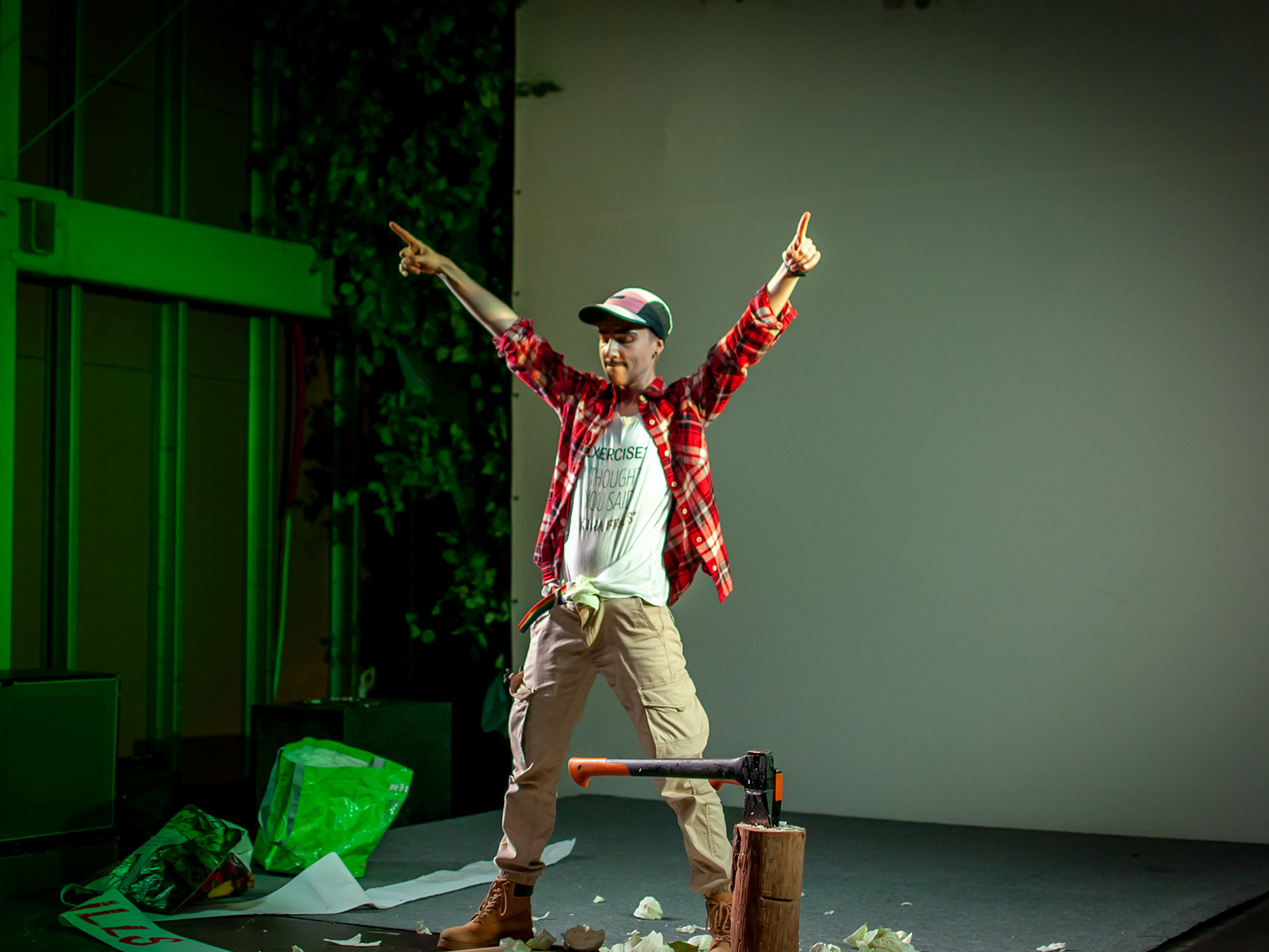
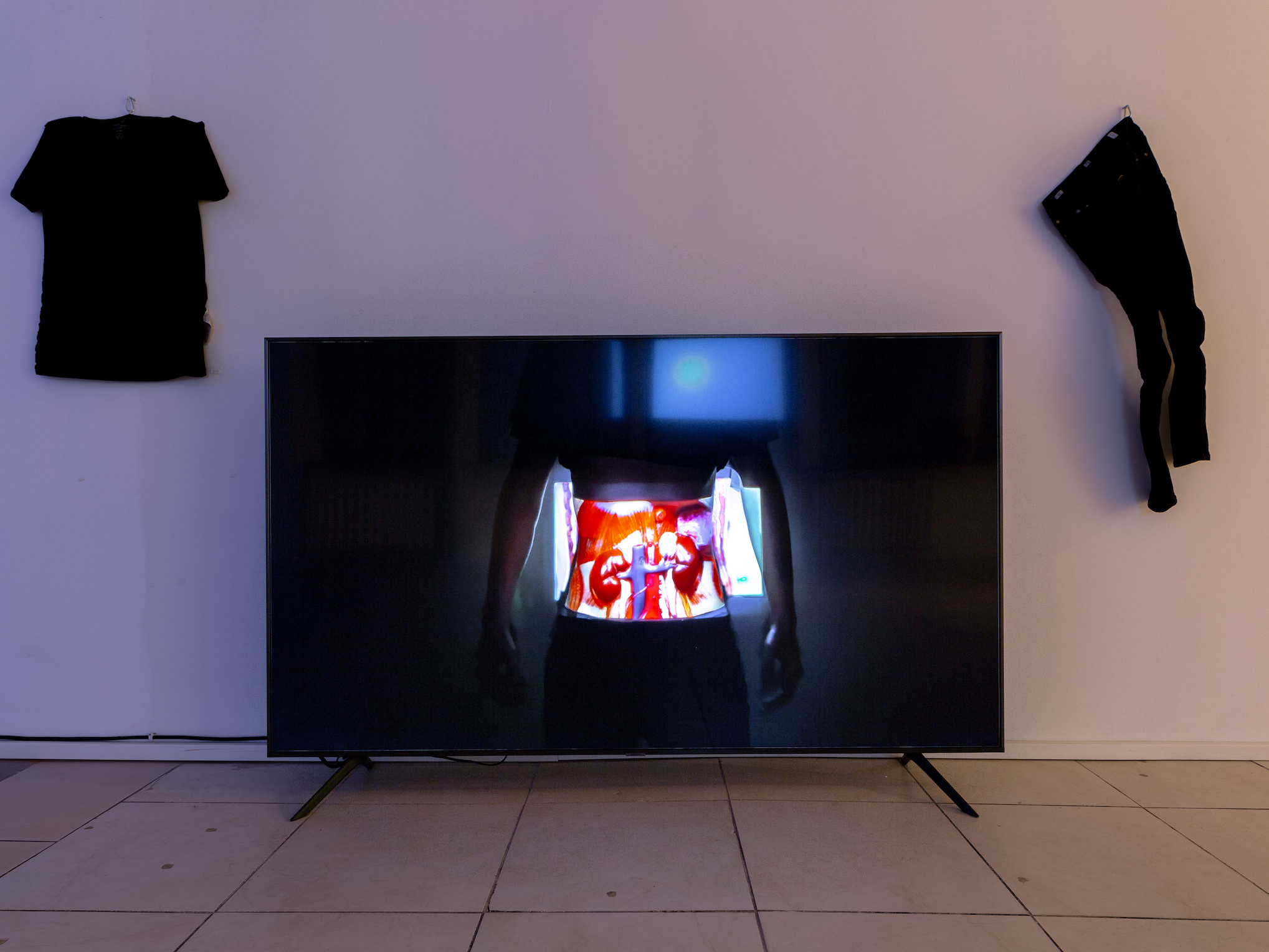
SVĀRSTS (PENDULUM) was presented during “Arsenāls būs!”, an event that also marked the launch of the book Arsenāls. The publication, which traces the history of the Arsenāls building and its role as an exhibition space and art institution, became one of the research points for the performance.
Opinions carry weight. In SVĀRSTS, that weight became literal.
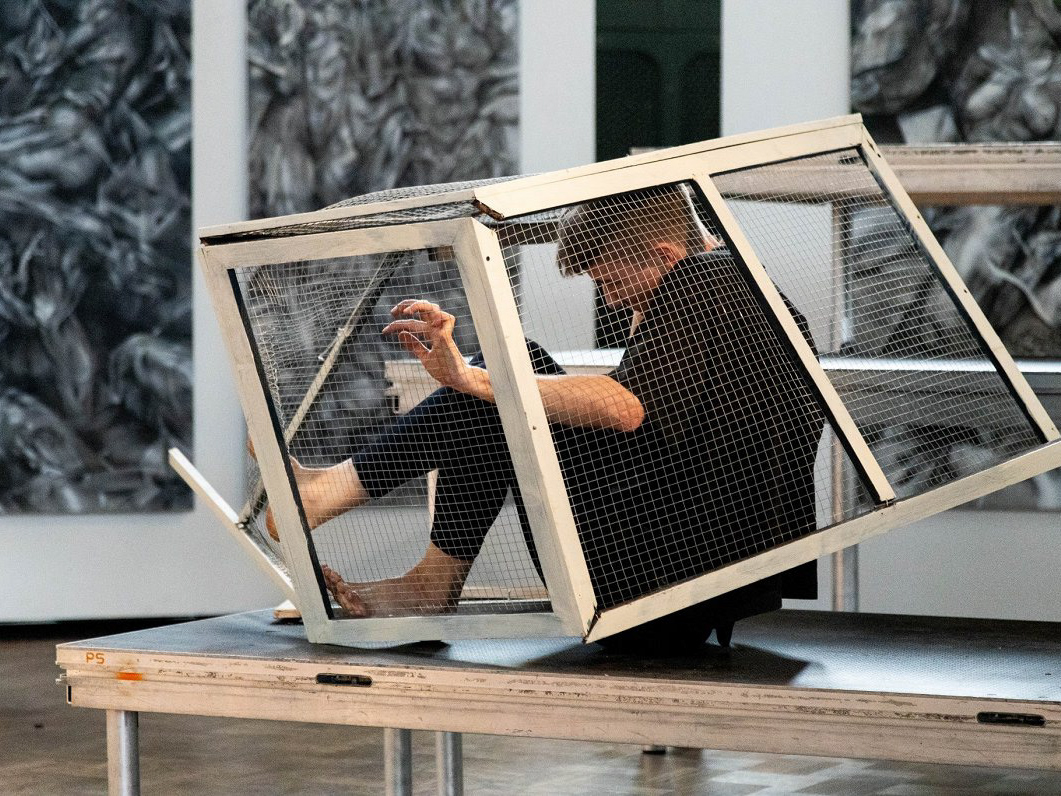
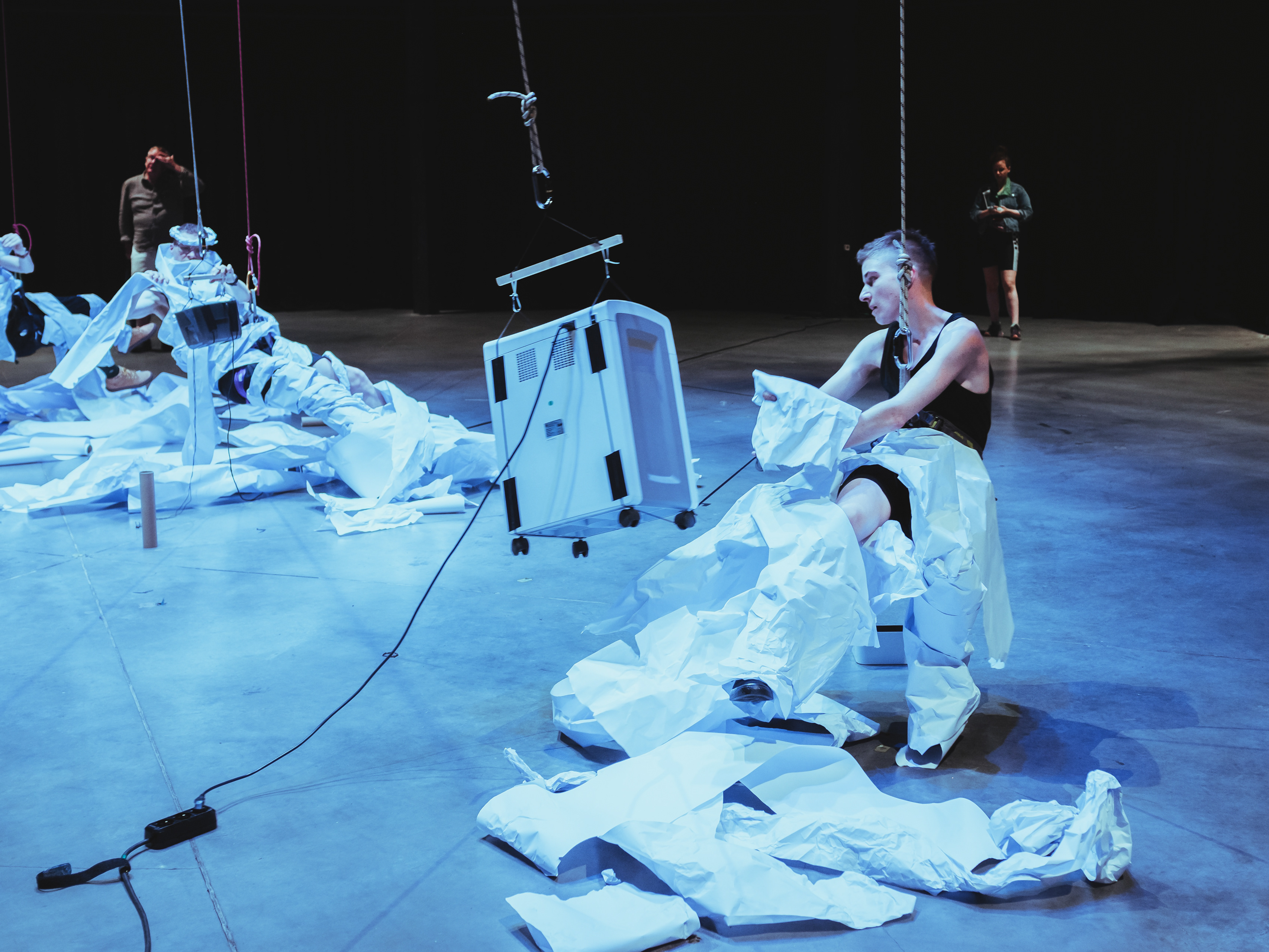
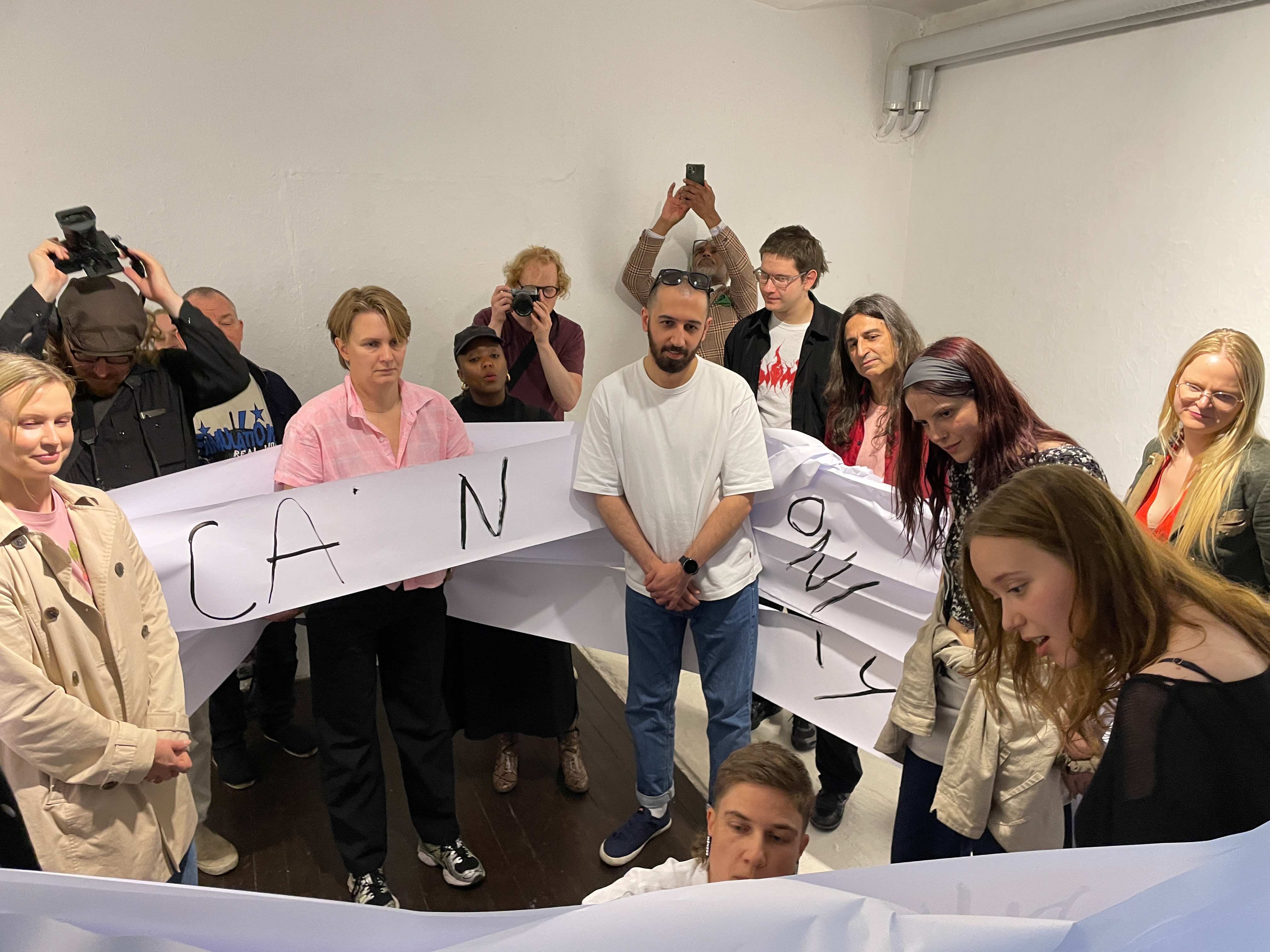
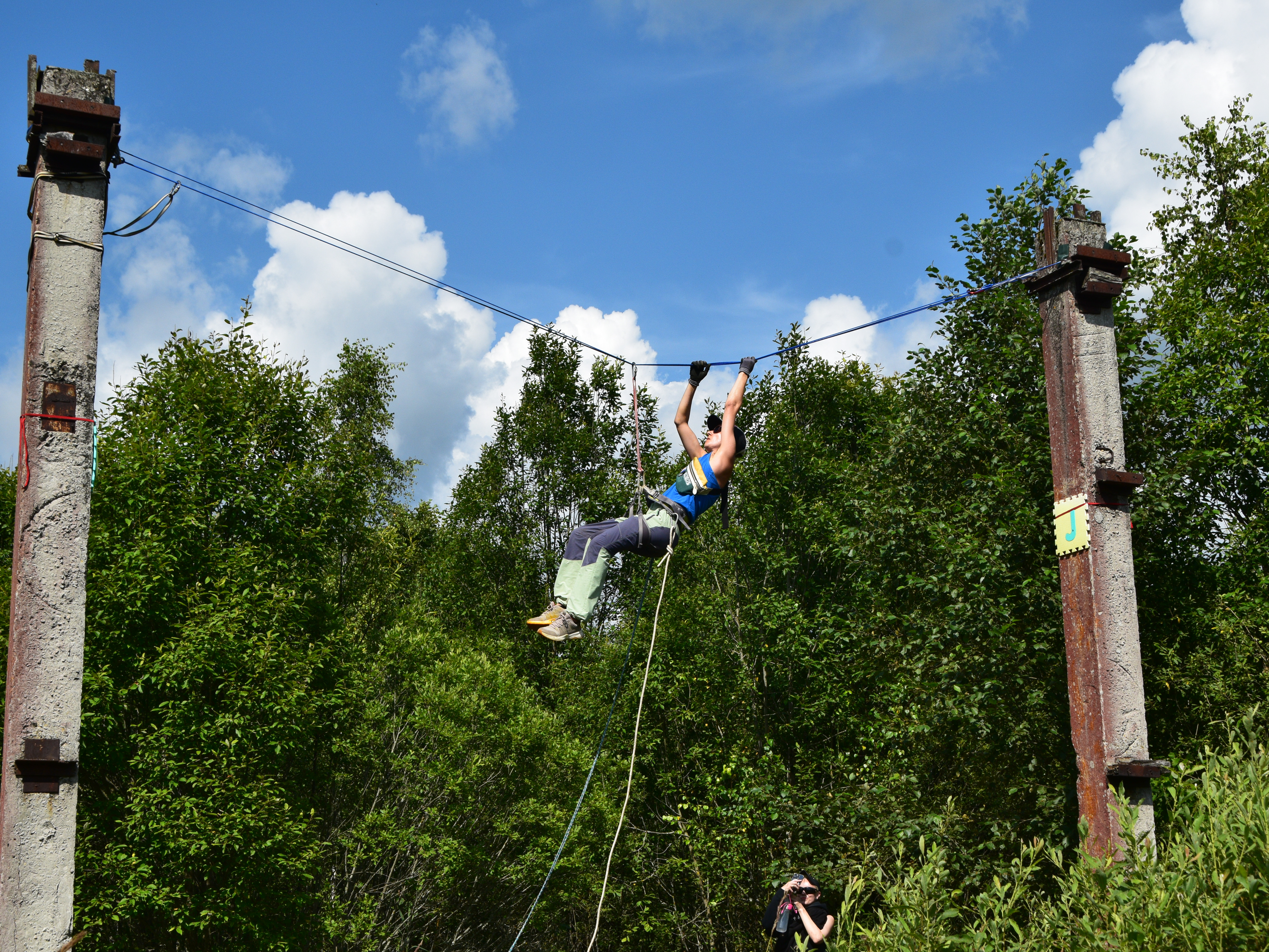
Suspended between two sides, my body became a physical indicator of the audience’s choices. I read a series of statements and invited participants to position themselves between agree and disagree. Instead of registering their responses through a vote or a show of hands, the audience pulled ropes attached to my harness, physically moving my body towards the side they supported.
The statements moved between seemingly simple questions about architecture and broader questions about cultural institutions: Can a building be uncomfortable if it is beautiful? Should an artwork be understandable without an explanatory text? Does a building have to fit into its surroundings? If a building needs a sign saying “entrance”, has the architect failed at their task? Other statements addressed artistic freedom, public and private funding, institutional authority, political neutrality, the formation of an art canon, and the responsibility of a public art institution towards its audience.
Rather than illustrating a majority opinion, the performance translated disagreement into force, distance and bodily movement. Every response affected the position of my body, while opposing pulls could temporarily hold me somewhere in between. The centre was therefore not a neutral or stable position, but something that had to be continually produced and negotiated.
SVĀRSTS used the body as a temporary measuring instrument for collective opinion: a body moved by conviction, hesitation, disagreement and the uneven distribution of force.
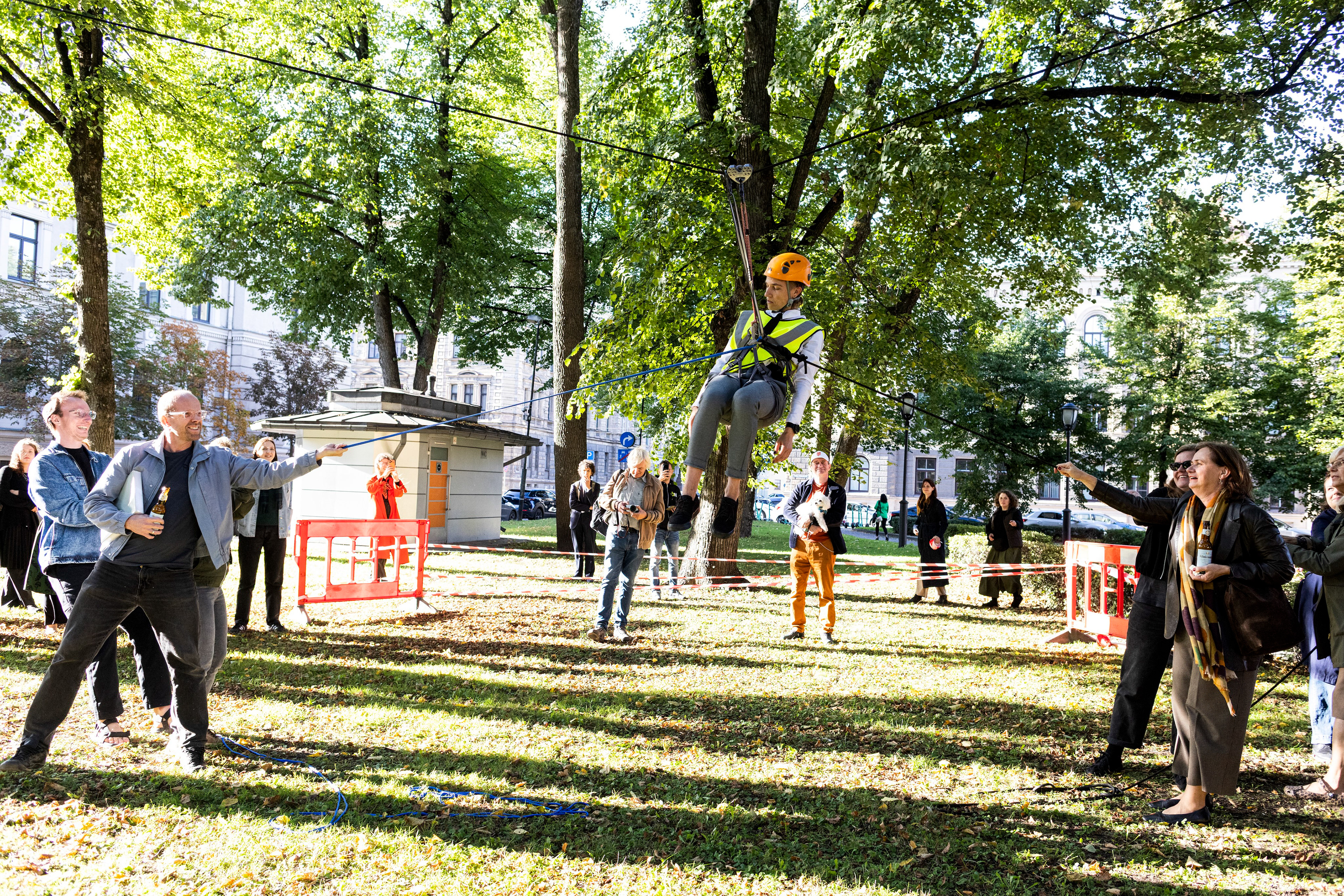
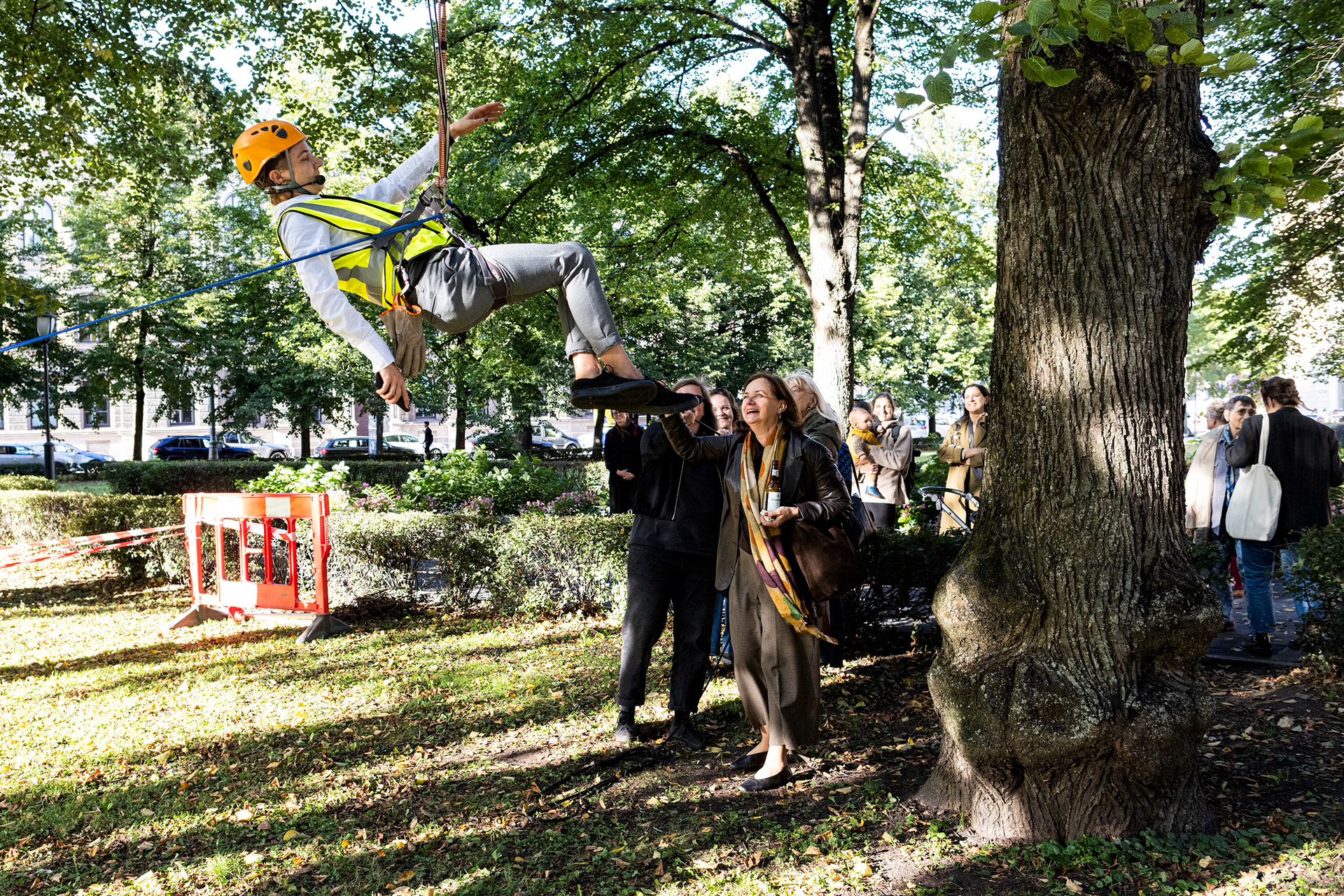
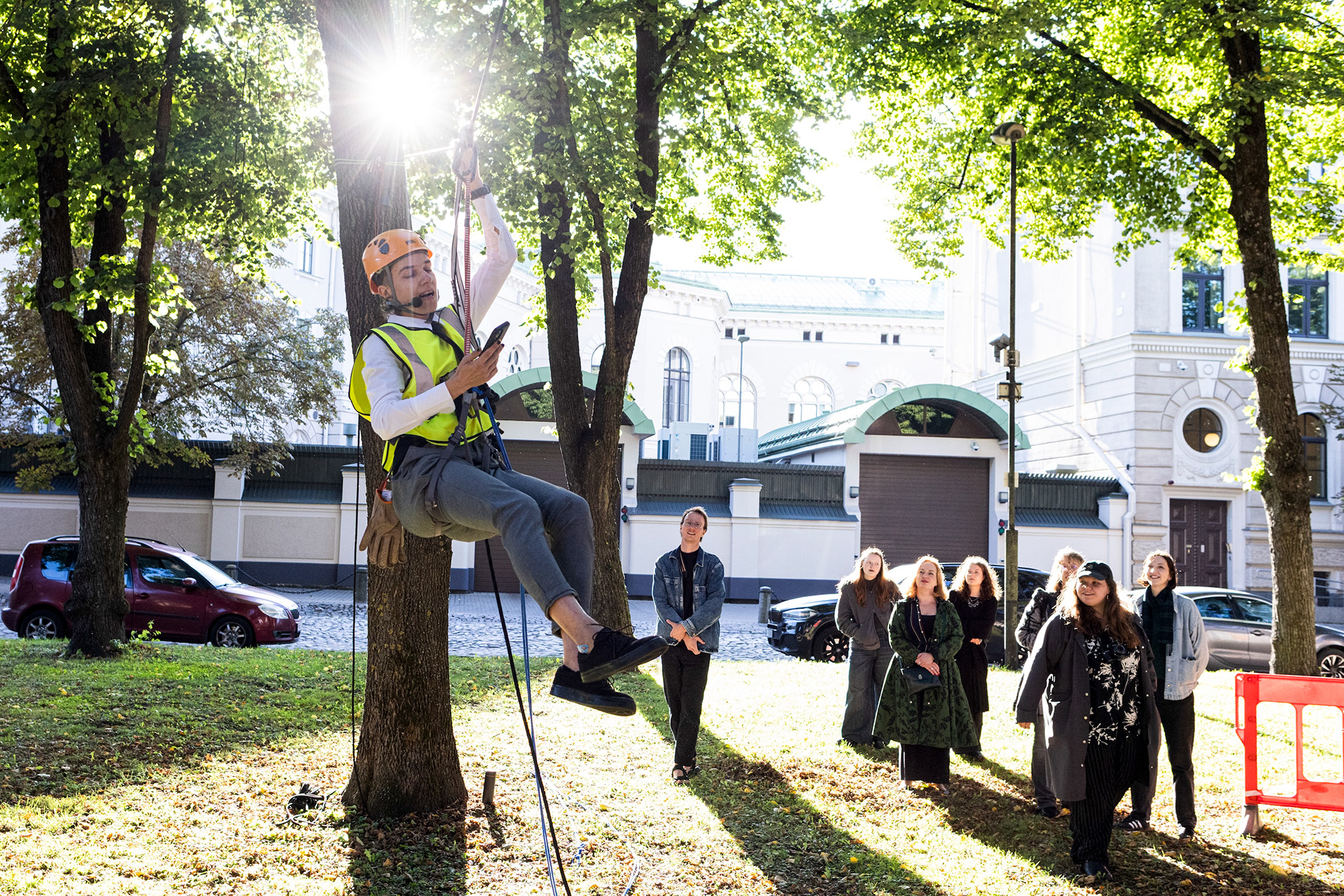
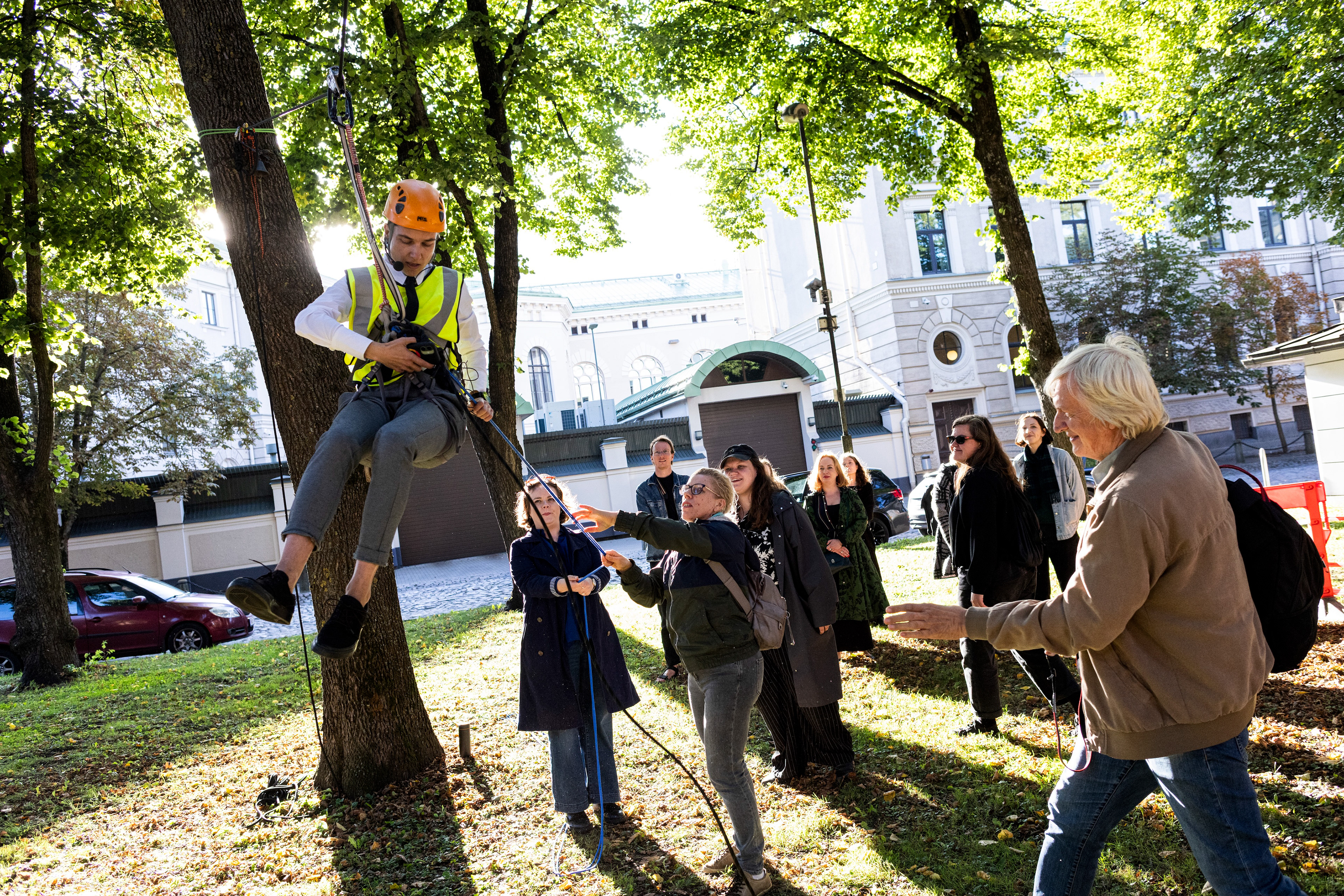
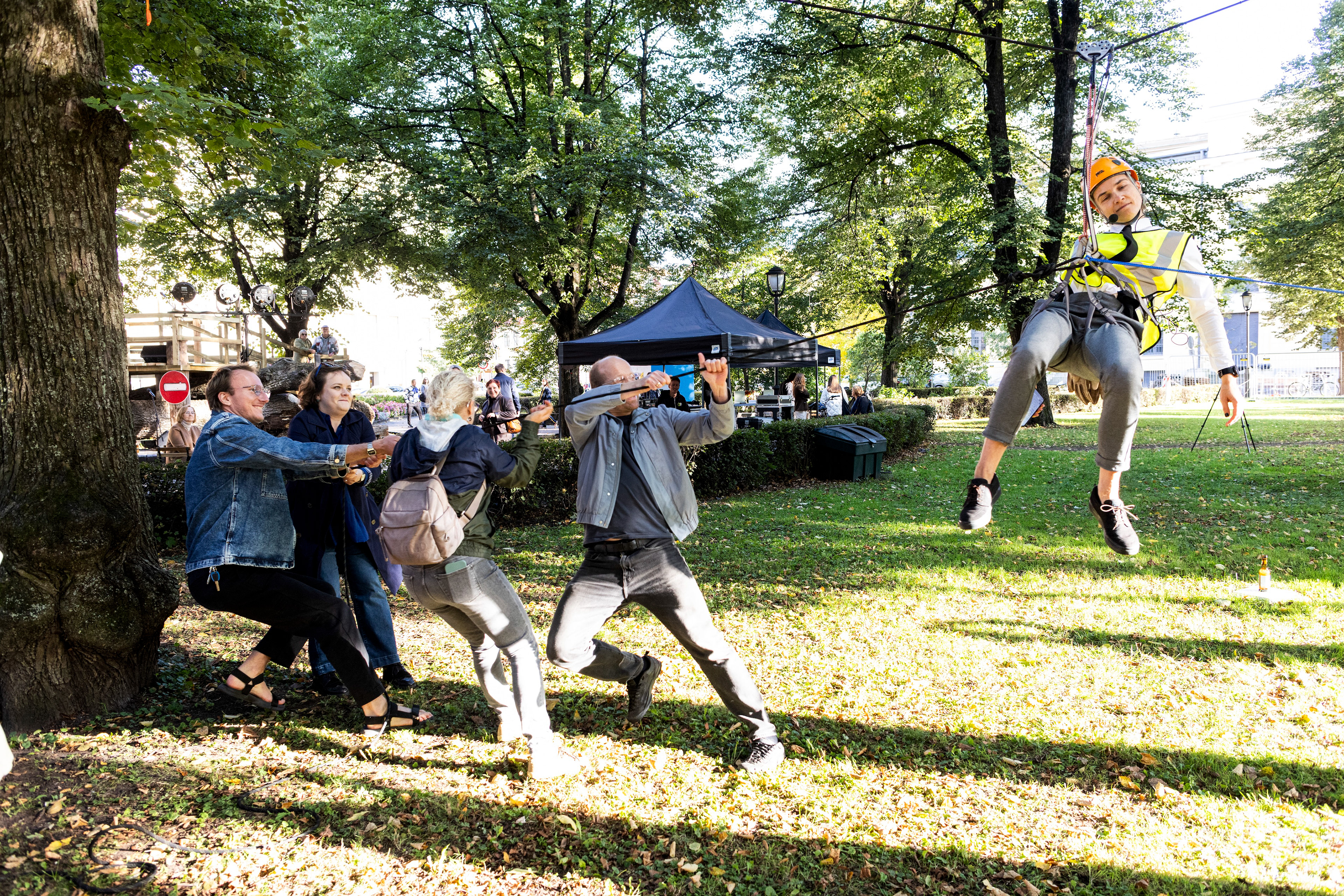
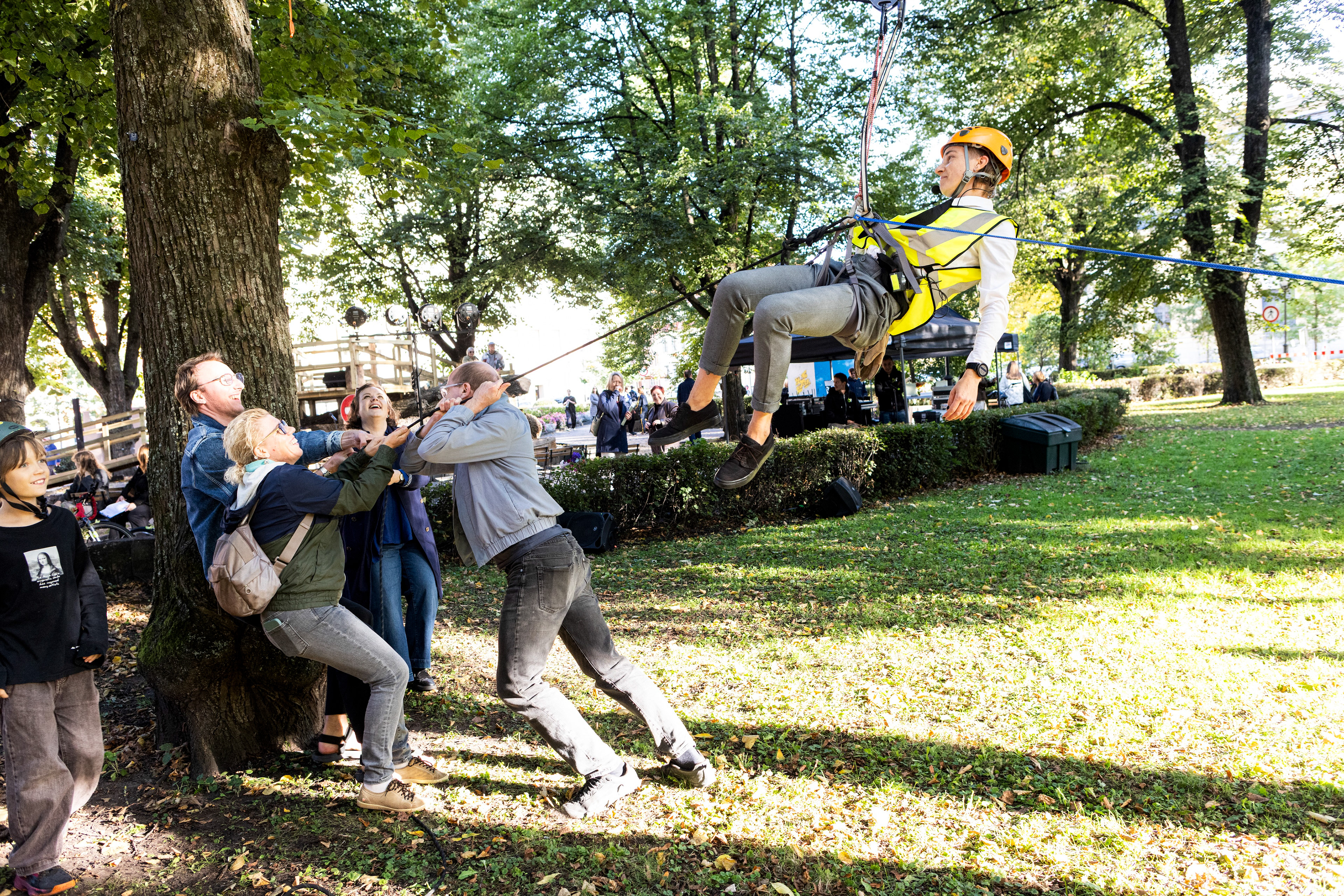
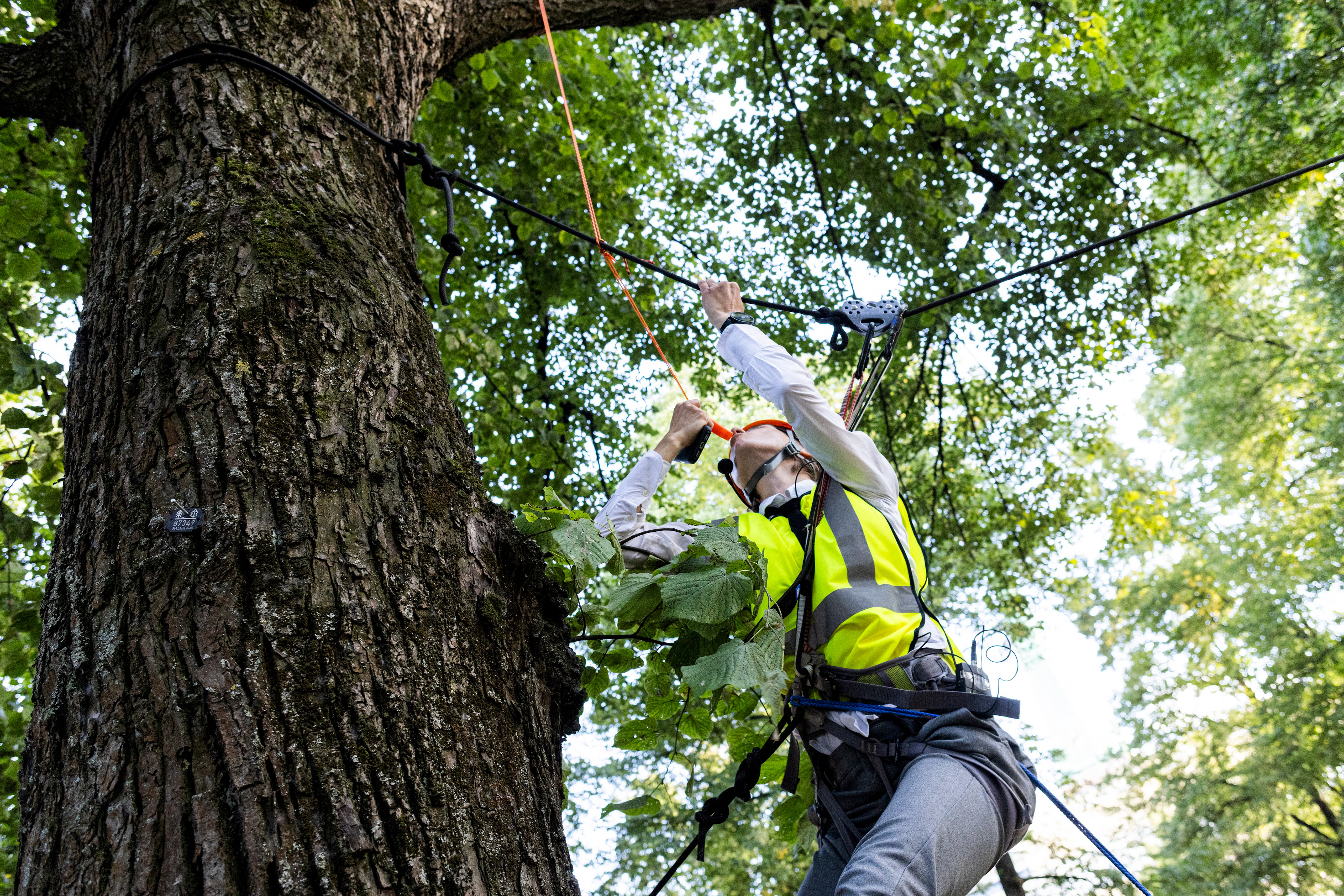
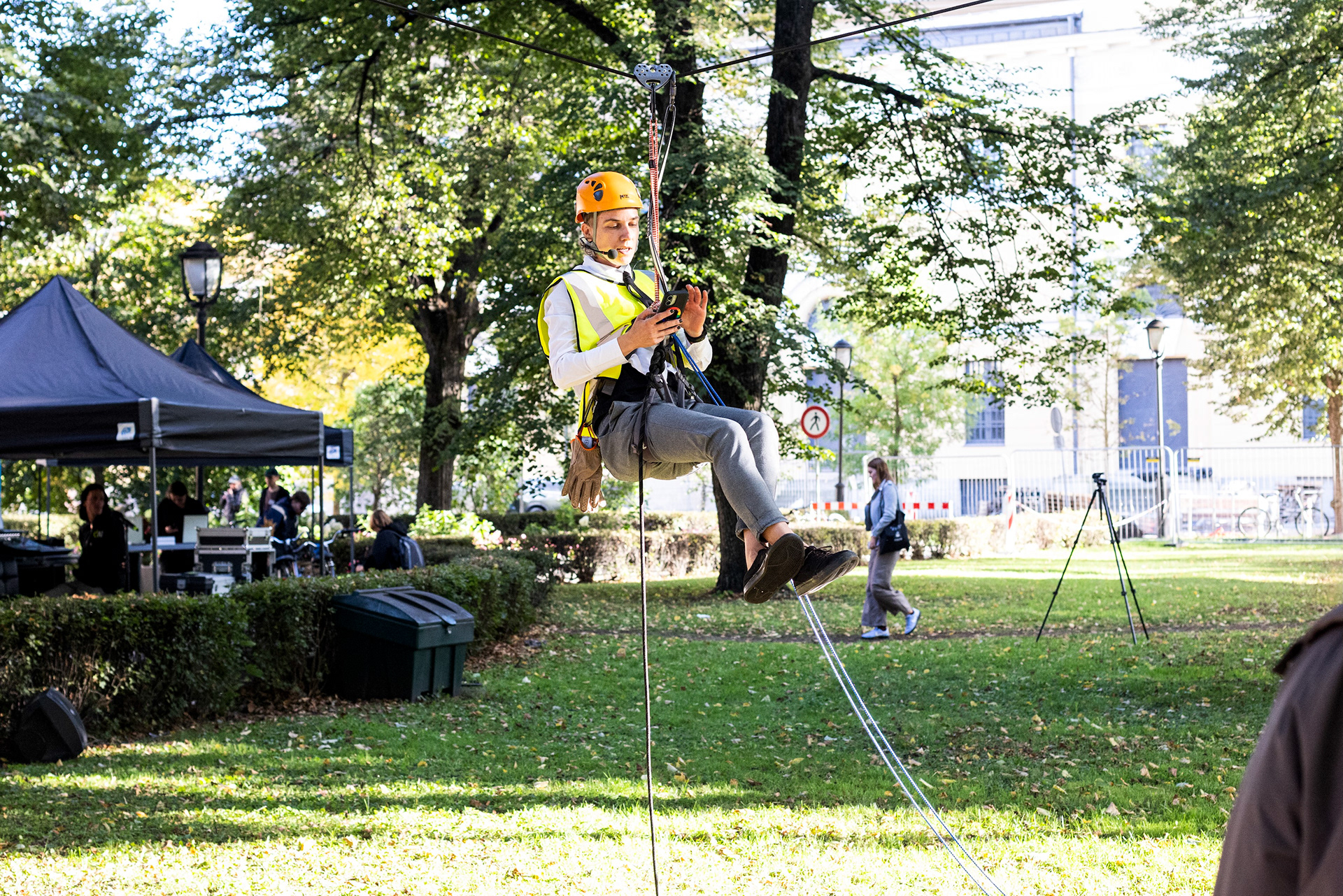
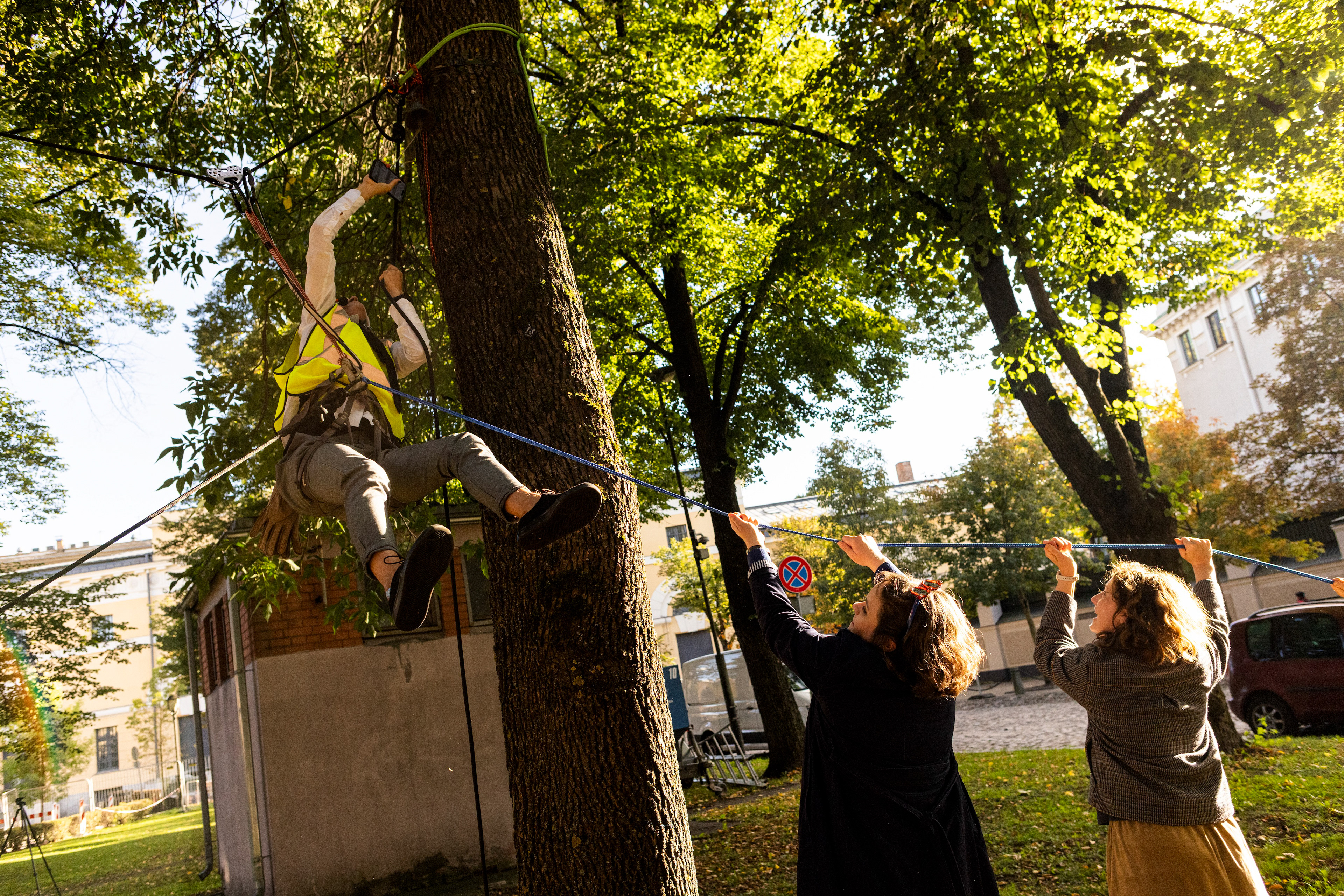
Foto: Kristīne Madjare
Performance “SVĀRSTS”
Viedokļiem mēdz būt svars. Šajā performancē tas kļuva burtisks.
“Svārsts” notika pasākumā “Arsenāls būs!”, kura laikā tika atvērta arī Latvijas Nacionālā mākslas muzeja izdotā grāmata “Arsenāls”. Grāmata un tajā dokumentētā “Arsenāla” vēsture kļuva arī par vienu no performances atspēriena punktiem — domājot par mākslas institūcijām, arhitektūru, izvēlēm, kompromisiem un to, kam ir tiesības noteikt, kas ir nozīmīgs, pieņemams vai saglabājams.
Performances laikā skatītāji izvēlējās savu pozīciju — piekrītu vai nepiekrītu — un vilka virvi uz savu pusi. Es kļuvu par ķermeni starp viņu pārliecībām, fiziski pārvietotu no vienas pozīcijas uz otru.
Vai ēka drīkst būt neērta, ja tā ir skaista?
Vai mākslas darbam jābūt saprotamam bez paskaidrojoša teksta?
Vai ēkai nav obligāti jāiederas apkārtnē?
Un, ja ēkai vajag uzrakstu “ieeja”, arhitekts nav ticis galā ar savu uzdevumu?
Vai mākslas darbam jābūt saprotamam bez paskaidrojoša teksta?
Vai ēkai nav obligāti jāiederas apkārtnē?
Un, ja ēkai vajag uzrakstu “ieeja”, arhitekts nav ticis galā ar savu uzdevumu?
Līdzās šiem šķietami vienkāršajiem apgalvojumiem parādījās arī jautājumi par mākslas institūciju varu, publisko un privāto finansējumu, māksliniecisko brīvību, sabiedrības reakciju un robežu starp saglabāšanu un pārmaiņām.
Jo vairāk cilvēku nostājās vienā pusē, jo grūtāk bija palikt centrā. Un centrs, kā izrādījās, nemaz nebija tik stabila vieta.